The Importance of Hydration
Explore the critical role of water in human physiology, optimal hydration strategies, and health implications of proper fluid intake.
Published: April 2024 | Reading time: 4 minutes
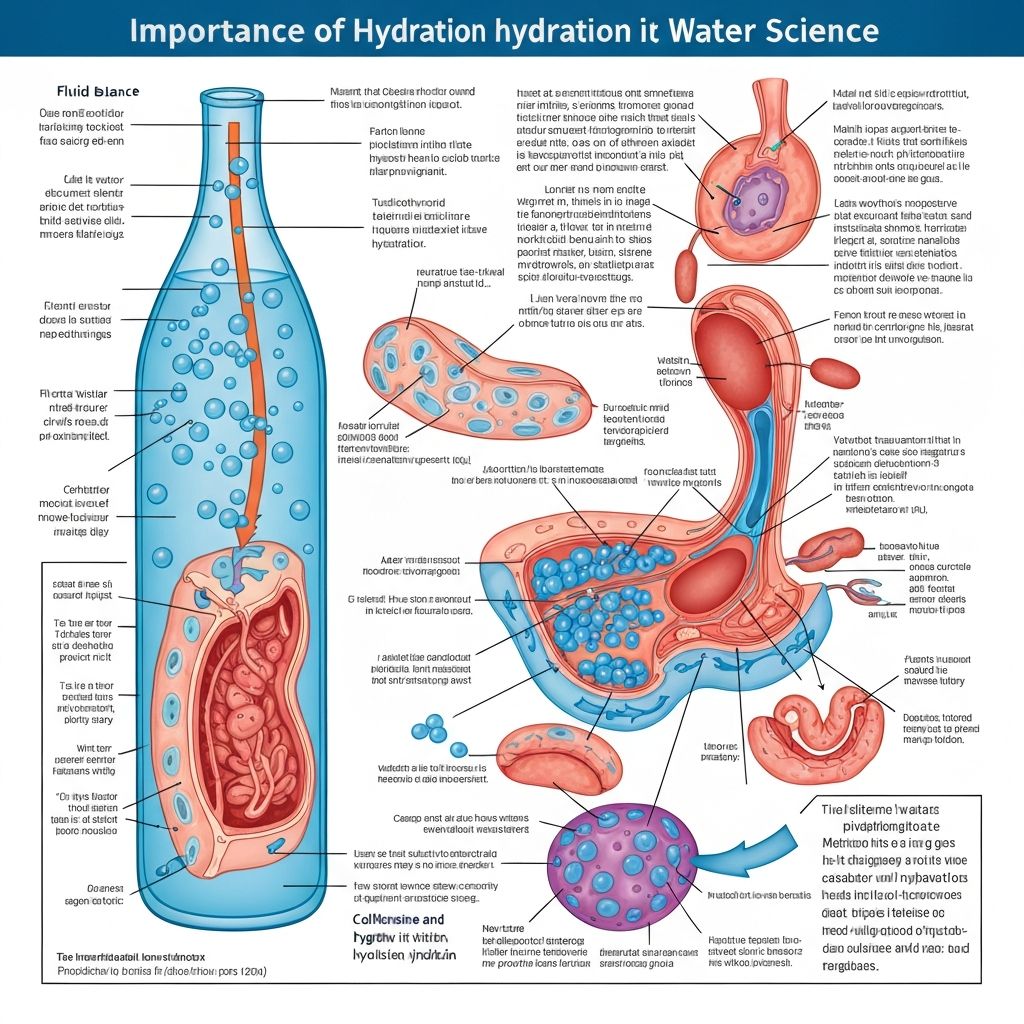
Water's Essential Functions
Water comprises approximately 50-70% of body weight and is essential for virtually all physiological processes. Despite water's critical importance, hydration status is often overlooked in health discussions.
Transport and Distribution
Water serves as the medium for transporting nutrients, oxygen, and waste products throughout the body. It maintains blood volume and circulation, ensuring adequate oxygen delivery to tissues.
Temperature Regulation
Water's high heat capacity allows it to regulate body temperature. Sweat evaporation on the skin surface dissipates heat, preventing dangerous rises in core body temperature during activity or in warm environments.
Metabolic Function
Water participates directly in metabolic reactions, including energy production and nutrient metabolism. Proper hydration supports efficient metabolic function.
Lubrication and Cushioning
Water maintains the synovial fluid in joints, cerebrospinal fluid around the brain and spinal cord, and other lubricating fluids supporting physical function and protection.
Even mild dehydration—as little as 1-2% of body weight loss—can impair cognitive function, attention, and physical performance. More significant dehydration can compromise temperature regulation and cardiovascular function.
Hydration Status and Health
Dehydration Effects
Dehydration—inadequate body water—can compromise physical performance, cognitive function, and thermoregulation. Symptoms of dehydration include thirst, dry mouth, reduced energy, concentration difficulties, and in severe cases, dizziness or rapid heartbeat.
Overhydration
While less common, excessive water intake without adequate electrolyte consumption can lead to hyponatremia (low blood sodium), which can cause serious health complications. This risk is primarily relevant during prolonged endurance activity with excessive fluid intake.
Determining Adequate Hydration
Fluid Needs
Fluid requirements vary considerably based on activity level, climate, metabolism, diet, and individual factors. General recommendations often cite 8-10 glasses (approximately 64 ounces) daily, but this is overly simplistic.
Individual Assessment
Better approaches to assessing hydration status include monitoring thirst, urine color (pale indicates better hydration, dark suggests inadequate fluid), and body weight changes during activity (loss of more than 2% suggests significant fluid loss).
Activity and Climate Considerations
Hydration needs increase substantially during physical activity and in warm climates. During exercise, drinking fluid in quantities that partially replace fluid losses (approximately 400-800 ml per hour, or 6-10 ml per kg body weight) supports performance and safety.
- Drink regularly during activity, not waiting until thirsty
- In prolonged endurance activity, include electrolytes (sodium, potassium)
- Begin activity already well-hydrated
- Continue hydration after activity to replace fluid losses
Fluid Sources Beyond Water
Water is the primary hydration source, but other beverages and foods contribute to fluid intake. Milk, tea, coffee, and other non-caffeinated or lightly caffeinated beverages are effective hydration sources. Fruits and vegetables with high water content also contribute to daily fluid intake.
Caffeine Considerations
While caffeine is often described as a diuretic, moderate consumption does not significantly impair hydration in regular users. However, in excess, caffeine can increase fluid losses. Plain water remains the most reliable hydration source.
Hydration Across the Lifespan
Hydration needs and mechanisms change across life stages. Older adults may have diminished thirst sensation despite ongoing fluid needs. Young children have higher body water percentages and greater fluid needs relative to body weight. Pregnant and nursing individuals have increased fluid requirements.
Summary
Adequate hydration is essential for supporting metabolic function, cognitive performance, physical capacity, and overall health. Rather than rigid guidelines, optimal hydration involves attending to individual thirst signals, monitoring urine color, and adjusting intake based on activity level and climate. For most people, drinking water when thirsty and maintaining pale urine color provides a practical hydration strategy.